
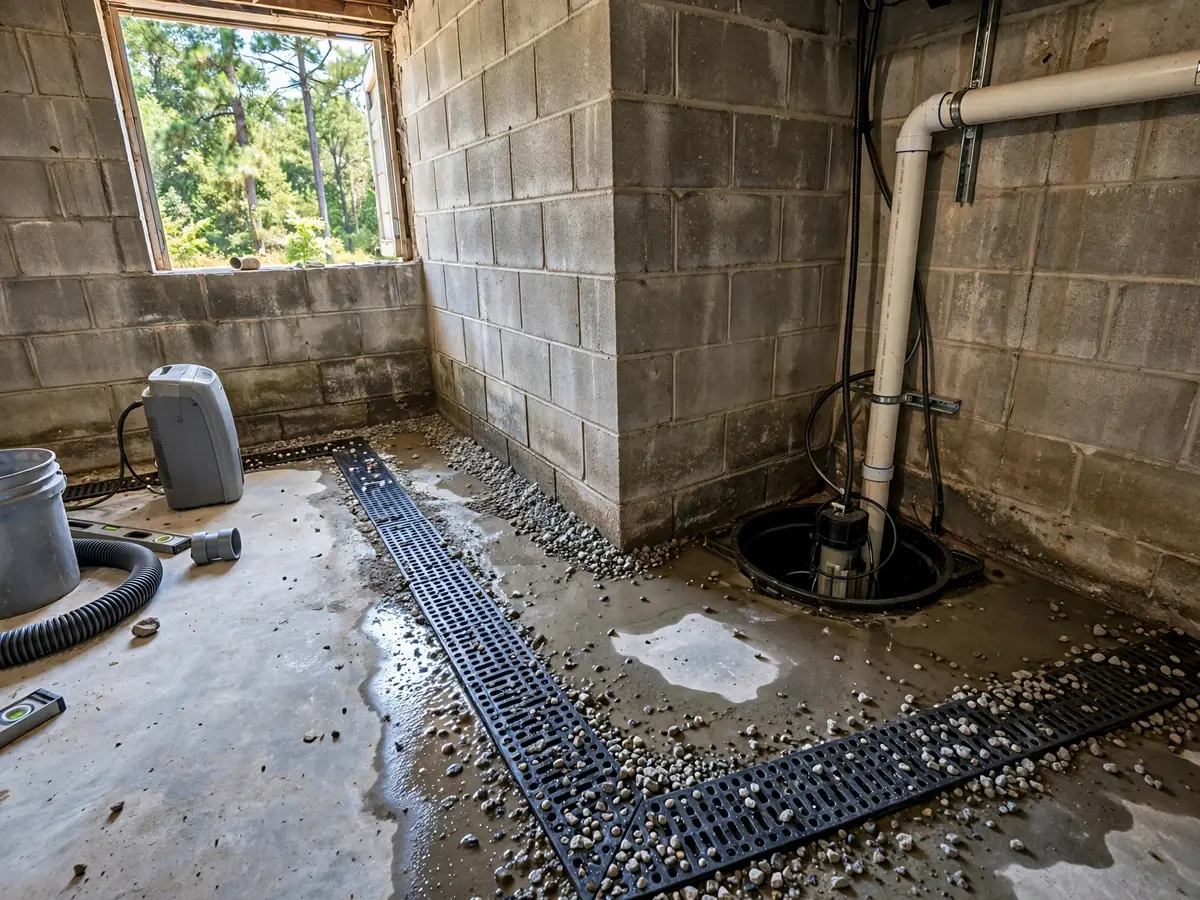
Basement Waterproofing in Maple Shade, NJ
A damp basement can come from a pipe, a drain, groundwater or the wall itself. We find the source first, then fix the plumbing side of the problem.
Start by Finding Where the Water Comes From
Basement water has several sources, and treating the wrong one wastes money. We look for plumbing sources first, because those are ours to fix. A leaking supply line, a failed drain or an overflowing pit is a plumbing problem, while seepage through the wall after rain is not.
| Clue | Likely source |
|---|---|
| Water only after heavy rain | Groundwater or surface drainage |
| Wet all the time, bill rising | A leaking pipe, see leak detection |
| Water at the floor drain | Sewer or drain backup, see sewer line cleaning |
| Water at the base of the water heater | Tank or fittings, see water heater repair |
| Damp wall with white powder | Moisture through masonry |
What We Do and What We Do Not
We handle the plumbing side of waterproofing. That includes sump pump and pit work, interior drain connections, discharge lines, leaking pipes and drain backups. We do not repair foundation cracks, install exterior membranes or excavate around the house, and we will say so.
That honesty has a purpose. If your problem is a wall that needs sealing or grading that sends water to the house, a plumber cannot fix it, and you should hear that early.
Sump Systems and Drainage
A sump pit collects water from a drain system or the soil and a pump moves it outside. When the pit is the right answer, the pump, check valve and discharge line have to be right, and a battery backup protects you in a storm. See sump pump repair for pump failures.
Gutters and downspouts that empty next to the foundation send roof water into the soil near the wall. Extending them is cheap, and it is the first step many basements need.
Wet Basements in Maple Shade
Maple Shade's 2006 master plan calls for controlling storm drainage and regulating flood plains, which tells you stormwater has been a planning issue. A sawmill once stood on Pennsauken Creek where Mill Road crosses Route 38, a sign that water runs through the area. Basements close to the creek or at low points are the ones to watch in long rain.
Many of the township's buildings date from 1960 to 1980, and older basements may lack interior drains or modern sump systems. We check what exists before suggesting what to add. We also look at basements in Pennsauken and Cherry Hill, where creeks form borders.
How Long Does It Take to Waterproof a Basement?
It depends on the cause. A pump replacement is a short visit. A new interior drain and pit is a multi-day project, and exterior work is a different trade with a longer schedule. We give a clear plan and price for the plumbing part so you can compare it with other quotes.
If a repair fits, we describe the steps, the disruption and what to expect in the first storm after the work.
Gutters, Grading and Where the Water Goes
Roof water that lands next to the foundation is often the biggest source of basement moisture. Downspouts should discharge several feet from the wall and the ground should slope away from it. These are inexpensive, and they come before any interior system.
Window wells fill in heavy rain too, and a well that is clogged with leaves can funnel water through the window. Clear them and make sure covers fit well.
What Affects the Price
Common Questions
A plumber can fix the plumbing side, including pumps, drains and leaking pipes. Wall sealing and exterior work are other trades.
Groundwater or surface runoff is the likely cause. Gutters, grading and a sump system are where we start.
A pump handles water in the pit. It will not fix seepage elsewhere.
If the water appears in dry weather or your bill rises, suspect a leak and call.
It keeps the pump running when the power fails, for a limited time.
No. We tell you honestly when the fix is outside our scope.