
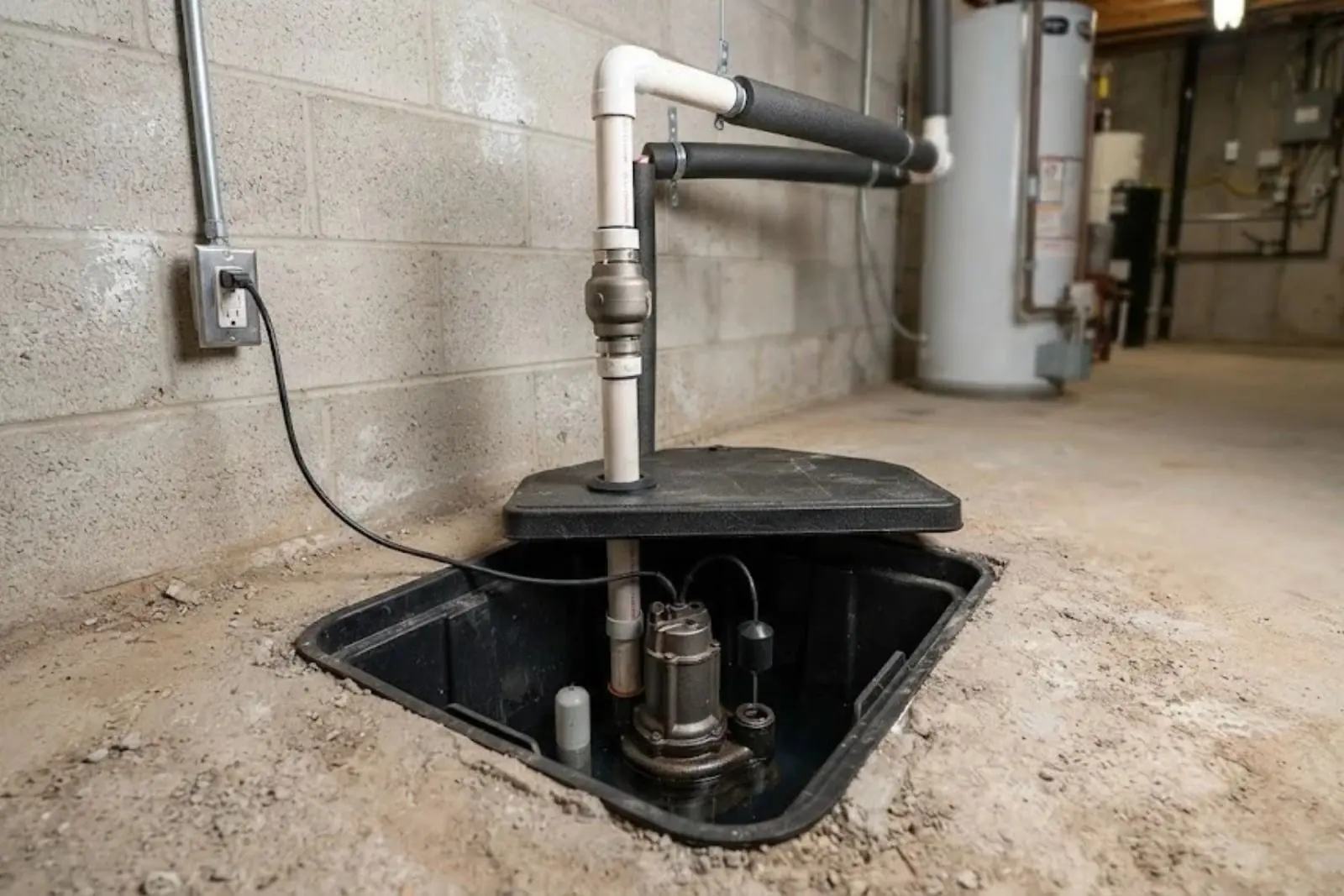
Emergency Sump Pump in Maple Shade, NJ
A sump pump that stops during a storm lets a basement flood in hours. Call the 24/7 line, and move anything valuable off the floor while a plumber is on the way.
Pump Stopped and Water Is Rising
A failed sump pump during heavy rain is an emergency, and our emergency sump pump repair line in Maple Shade is open 24/7 with same-day visits when we can. Check that the pump is plugged in and the breaker is on, lift the float to see if the pump starts, and move belongings off the floor. Do not step into standing water if the electrical panel or outlets are wet.
If the pump runs but does not move water, the check valve or discharge line may be blocked or frozen. Buckets and a wet vacuum buy time until we arrive.
Why Sump Pumps Fail
| Failure | What you notice | Repair |
|---|---|---|
| Stuck float switch | Pump never starts or never stops | Free or replace the switch |
| Burned-out motor | Hums then stops | Replace the pump |
| Clogged intake | Runs but pumps little | Clean the pump and pit |
| Failed check valve | Water slaps back after each cycle | Replace the valve |
| Power failure | Dead during a storm | Add a battery backup |
Most pumps last roughly 7 to 10 years. A pump that is older, cycles constantly or has never been tested is a candidate for replacement before the next storm.
Sump Pump Repair problem right now?
Call the 24/7 line. We book the next available visit and tell you what to do while you wait.
Why Maple Shade Basements Need Pumps
The township's 2006 master plan calls for controlling storm drainage and regulating flood plains. A sawmill once stood on Pennsauken Creek where Mill Road crosses Route 38, a reminder that the creek is part of the local landscape. Homes close to it are the ones to watch in prolonged rain, and a working pump matters most when your neighbors are dealing with the same storm.
Many buildings from the 1960 to 1980 growth period were built with basements, and some have older pits and pumps. We check the pit, the discharge line and where the water goes, because a pump that discharges next to the foundation only recirculates the water.
Battery Backups and Testing
Storms often take out the power, and that is exactly when a pump matters. A battery backup runs the pump for a limited time. It does not replace a good primary pump, but it protects you for the length of a typical outage.
Test the pump a few times a year by pouring water into the pit until the float lifts. If it does not start, call before the next forecast of heavy rain.
When the Problem Is Bigger Than a Pump
A pump that runs constantly may point to a high water table or a leaking pipe feeding the pit. Check whether it runs in dry weather. If it does, a leak may be involved, and leak detection can find it.
For chronic seepage that a pump cannot keep up with, see basement waterproofing. We also work in Cinnaminson and Cherry Hill, where creek-side basements are common.
Choosing a Replacement Pump
Submersible pumps sit in the pit and are quieter and better for finished basements. Pedestal pumps sit above the pit, cost less and are easier to service, but they are louder and take more space. A cast iron body dissipates heat better than plastic.
Size the pump to the pit and the demand. Too small and it cannot keep up. Too large and it short-cycles. We check the vertical lift and the length of discharge pipe before recommending one.
What Affects the Price
Common Questions
Yes. The line is open 24/7. A failed pump during a storm is urgent.
Pour a bucket of water into the pit. The float should lift and the pump should empty it.
Often 7 to 10 years, depending on use.
If your basement floods when the power is out, a backup is worth considering.
Well away from the foundation. A line that empties near the wall brings water back to the pit.
It handles water that collects in the pit. Wall seepage and leaks need another fix.