
Emergency Leak Detection in Maple Shade, NJ
A wet ceiling, a warm spot on the floor or a water meter that keeps spinning is a leak you cannot see. Call the 24/7 line, and we will help you limit the damage while a plumber is on the way.
Active Leak Right Now: First Steps
An active leak is an emergency when water is staining ceilings, soaking floors or running unchecked. Our emergency leak detection line in Maple Shade is open 24/7 with same-day visits when the schedule allows. Close the main shutoff, open one faucet to relieve pressure and stay away from wet ceilings near light fixtures.
If you are not sure the leak is serious, check the meter. Shut every fixture off, then watch the small dial or triangle. If it moves, water is leaving somewhere you cannot see.
Meter Still Running or a Sudden High Bill
Many leak calls begin with a bill, not a puddle. A running toilet flapper, a dripping faucet and a leaking irrigation line can add up, but a steady meter reading with every fixture off usually means a line problem. We separate the house from the service line by closing the main shutoff and watching the meter again.
If the meter stops when the main is closed, the leak is inside the house. If it keeps moving, the leak is between the meter and the house, a case covered in the buried line section below. Utility rules for adjustments vary, so ask your utility about billing separately.
Where Leaks Hide
Ceilings and walls
Brown stains, bubbling paint or a damp smell point to a supply or drain line above.
Slab floors
Warm spots, wet carpet or the sound of running water under a concrete floor suggest a slab leak.
Crawlspaces and basements
Damp joists, new mold or dripping at a fitting below a bathroom.
Yards and meter boxes
A soggy patch of lawn or a wet meter pit points to the service line.
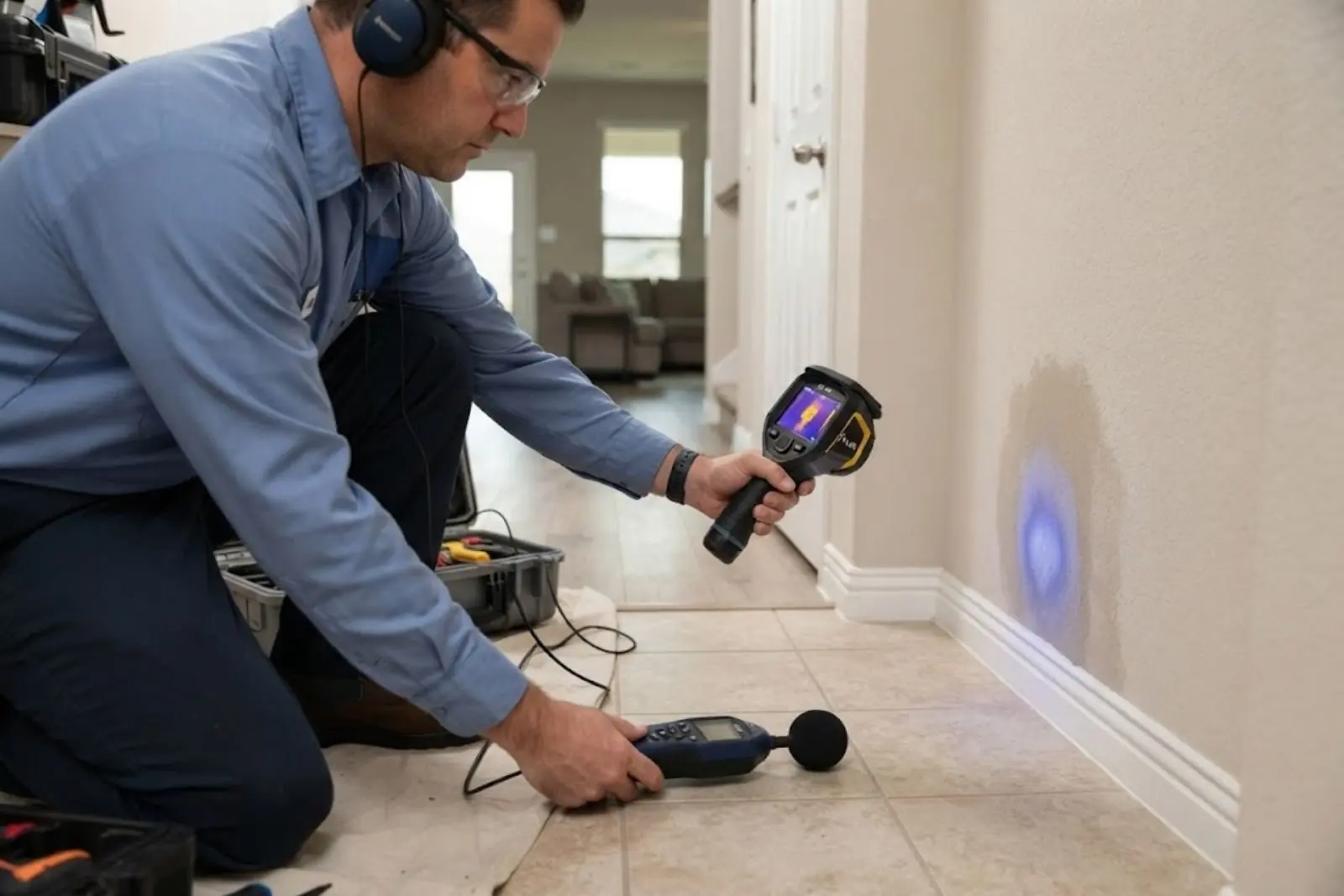
We use listening equipment, thermal imaging and moisture meters, then pressure tests to confirm. The aim is to open the smallest possible area, not to guess and cut.
Leak Detection problem right now?
Call the 24/7 line. We book the next available visit and tell you what to do while you wait.
Buried Service Line Leaks
The line from the water main to your house is buried and runs under lawns, driveways and walks. It fails from age, corrosion, shifting soil or damage during other work. Signs are a wet lawn without rain, low pressure and a meter that moves when the house is off.
The 2024 report from Maple Shade Utilities discusses its lead service line inventory, so it is worth asking the utility what material your service line is. If the line is in the street, the utility owns that part. If it is on your property, the repair is yours, and we will explain the choices before any digging.
Older Buildings and Wet Weather
Maple Shade built heavily between 1960 and 1980, according to the township's 2006 master plan, and plumbing from those decades is now at the age where joints and fittings begin to weep. The same plan calls for controlling storm drainage and regulating flood plains, so after heavy rain a wet basement may be groundwater, a sewer problem or a leak. We sort out which before recommending a fix.
For basement water that is not from a pipe, see basement waterproofing. For drain leaks, a camera pass during sewer inspection shows what the pipe is doing.
Ceiling and Wall Leaks
A stain on a ceiling is where water ended up, not necessarily where it started. Water travels along joists and pipes before it shows, so a bathroom leak can stain a ceiling in the next room. We open the smallest area that proves the source.
Check the stain over a day. A stain that grows with no rain nearby points to a plumbing line, while one that appears only after storms points to a roof. If water is dripping, place a bucket, poke a small hole to let a bulging ceiling drain safely and keep away from nearby light fixtures.
Yard, Irrigation and Outdoor Leaks
Not every leak is in the house. A hose bib that drips inside the wall, an irrigation line that has cracked and a service line in the yard all cost water. We trace these with the meter test, listening and pressure checks.
Outdoor spigots that are not shut off before freezing are a classic cause of a leak inside the wall in spring. Pool and spa lines are a smaller category, and we treat them the same way, by isolating each branch and pressure testing it.
What Affects the Price
Insurance note
Many policies cover damage from a sudden leak but not the cost of finding it, and often exclude slow leaks. Ask your insurer which applies.
Common Questions
Yes. The line is answered 24/7. An active leak soaking a ceiling or floor is treated as urgent.
Warm patches on a floor, damp carpet, a running meter with the house off or the sound of water under concrete are common signs. A plumber confirms with listening gear and pressure tests.
We try to pinpoint the leak first so the opening is small. Sometimes access is unavoidable, and we explain it before starting.
It may be. Turn off every fixture and check whether the meter still moves, then call.
Yes. A flapper that does not seal can waste a surprising amount of water without any noise.
You do, since that part is on your property. We will explain the repair options and the price first.